
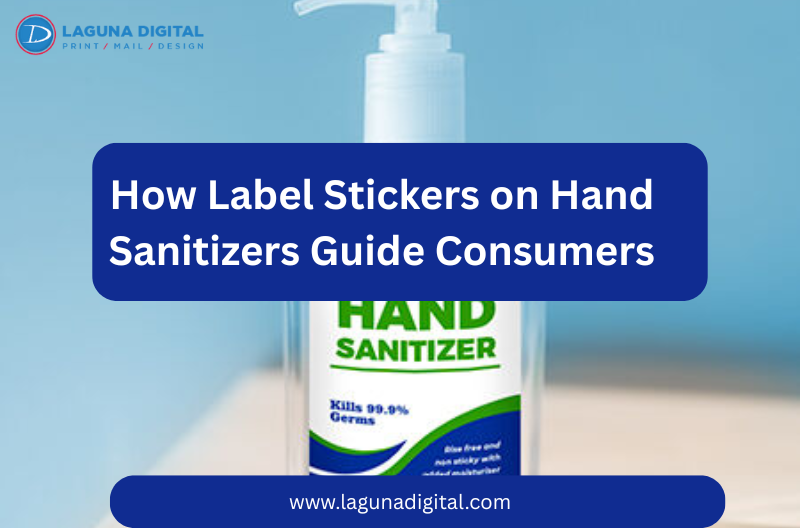
We have all experienced that moment of hesitation. You are standing at a reception desk or a trade show booth, and you reach for a bottle of hand sanitizer. If the bottle is unbranded or has a peeling, smeared label, you pause. You wonder if it’s actually sanitizer inside, or if it’s safe to use. That split-second hesitation is exactly what businesses need to avoid.
As a marketing professional who has helped hundreds of businesses navigate the post-pandemic landscape, I have learned that a label is never just a decoration. It is a functional guide. It tells the user what the product is, how to use it safely, and who is responsible for it. At Laguna Digital, we emphasize that a well-designed label bridges the gap between a generic commodity and a trusted tool. It guides the consumer through the experience, ensuring safety and reinforcing brand reliability in one go.
Let’s dive into how these small stickers play a massive role in guiding consumer behavior and why getting them right matters for your business.
The Silent Instructor: Communicating Usage Effectively
Most people assume they know how to use hand sanitizer: squirt and rub. But from a safety perspective, that is often insufficient. Effective sanitization requires a specific amount of product and a specific duration of rubbing (usually until dry).
A custom label acts as a silent instructor. When we design hand sanitizer stickers for clients, we often suggest including concise directions like “Apply thoroughly” or “Rub for 20 seconds.” This subtle guidance ensures the product actually works as intended. Without these prompts, consumers might under-apply, rendering the safety measure useless.
This becomes even more critical in professional settings like clinics or food service areas. The sticker isn’t just suggesting hygiene; it is enforcing protocol. By placing clear text on the bottle, you are guiding the user to comply with health standards without saying a word.
Navigating Compliance and Safety Warnings
Beyond usage instructions, the most important role of a sanitizer label is to guide the consumer away from harm. Hand sanitizer is generally an alcohol-based product, which means it is flammable and can be toxic if ingested.
I have seen businesses try to cut corners by printing simple logo stickers that ignore these realities. This is a mistake. A professional label must guide the consumer on safety, typically through a “Drug Facts” panel that lists active ingredients and warnings. This isn’t just about avoiding lawsuits; it is about moral responsibility.
When you browse our labels and stickers category, you will see that we prioritize clarity. A label that guides a parent to “Keep out of reach of children” or warns a user about flammability builds immense trust. It shows that the business cares about the consumer’s well-being, not just their wallet.
The Importance of Material in Preserving the Message
Here is a practical insight that often surprises our clients: The content of your label doesn’t matter if it disappears after a week. Hand sanitizer contains alcohol, which is a potent solvent. If you splash sanitizer on a standard paper label printed with cheap ink, the text dissolves.
I once worked with a client who printed thousands of labels on basic sticker paper. Within days of use, the instructions were illegible smears. The guide was gone. To prevent this, we utilize professional digital printing with UV-cured or solvent inks on durable materials like vinyl or BOPP (polypropylene).
These materials are resistant to oils, water, and alcohol. By ensuring the label stays intact, you ensure the guidance remains available for the life of the product. It is a small detail that makes a huge difference in how professional your brand looks.
Visual Hierarchy: Guiding the Eye
Consumers don’t read labels; they scan them. If your label is a wall of tiny text, the user will ignore it. Effective design uses a visual hierarchy to guide the eye to the most important information first.
Usually, the flow should be: Brand Logo -> Product Name (Sanitizer) -> Key Benefit (e.g., “Kills 99.9% of Germs”) -> Safety Warnings. When we are prototyping designs for clients, we often recommend printing a stickers sheet first. This allows you to stick the labels on actual bottles and see if the flow works in the real world.
If the bottle is small, you might need to rely on icons. A simple “flame” icon guides the user to keep the bottle away from heat faster than a sentence of text. High-quality photo printing ensures these small icons remain sharp and recognizable, preventing confusion.
Integrating Sanitizer into a Broader Marketing Ecosystem
A label on a bottle shouldn’t exist in a vacuum. It should guide the consumer to connect the sanitizer with your broader brand environment. This is something I’ve discussed in previous articles on Laguna Digital, where we explore how cohesive branding creates trust.
Imagine walking into a conference. You see large banners, posters, and signs directing you to registration. You are handed a welcome kit containing a sanitizer bottle. If the sticker on that bottle matches the font and colors of the banners, it reinforces the message that you are in a controlled, professional environment.
For internal employee safety kits, we have even paired branded sanitizers with printed safety manuals. While book printing is a separate service, combining a detailed guidebook with a quick-reference sanitizer label creates a comprehensive safety net for your staff.
Practical Tips for Business Owners
If you are planning to use hand sanitizer as a promotional tool or a safety necessity, keep these practical tips in mind:
-
Don’t hide the ingredients: People have allergies and preferences. Guiding them to the ingredient list respects their health choices.
-
Use high contrast: Small text is hard to read. Black text on white (or vice versa) is the gold standard for safety info.
-
Think about the “Touchpoint”: This item will be handled frequently. A soft-touch laminate or a high-gloss finish can make the tactile experience more pleasant, subtly guiding the user to value the item more.
For those looking to create a full suite of branded items, checking out our marketing materials section can give you ideas on how to pair sanitizers with other useful items like pens or notepads.
FAQs
Why is the “Drug Facts” panel important on a sticker?
Hand sanitizer is regulated as an Over-the-Counter (OTC) drug in many places. The “Drug Facts” panel guides the consumer on active ingredients, uses, and warnings. It is essential for compliance and safety.
Can I print sanitizer labels on my office printer?
You can, but you shouldn’t. Office inkjet ink will smear when it comes into contact with alcohol sanitizer. Professional digital printing uses durable inks and materials that withstand the product’s chemical nature.
How do I fit all the info on a small bottle?
It is a challenge! We recommend using a “wrap-around” label that utilizes the back of the bottle for text. Prioritize the most critical warnings and ingredient info. If necessary, use a QR code for detailed info.
What material is best for these stickers?
Polypropylene (BOPP) or Vinyl. These are plastic-based materials that are waterproof and tear-resistant. Paper labels are generally not durable enough for hand sanitizer bottles.
Do people actually read these labels?
They scan them. They look for the alcohol percentage to ensure effectiveness and check for expiration dates. If the label looks professional, they trust the product. If it looks cheap, they might not use it.
Can a sticker shape affect consumer perception?
Yes. A custom die-cut sticker can make a generic bottle look like a premium custom product. It shows attention to detail, which guides the consumer to perceive your brand as high-quality.
Conclusion
The humble label sticker on a hand sanitizer bottle is a powerful tool. It does much more than display a logo; it guides the consumer through usage, ensures their safety, and signals that your business is trustworthy and compliant.
In a world where hygiene is paramount, the clarity and quality of your safety labels speak volumes about your brand’s values. Don’t let a blurry, peeling sticker send the wrong message.
If you are ready to create labels that guide and protect your customers, we are here to help. Visit the Laguna Digital Blog for more marketing insights, or explore our printing services to get started on your next project. Safety is a journey—let your labels be the guide.


Leave a Reply