
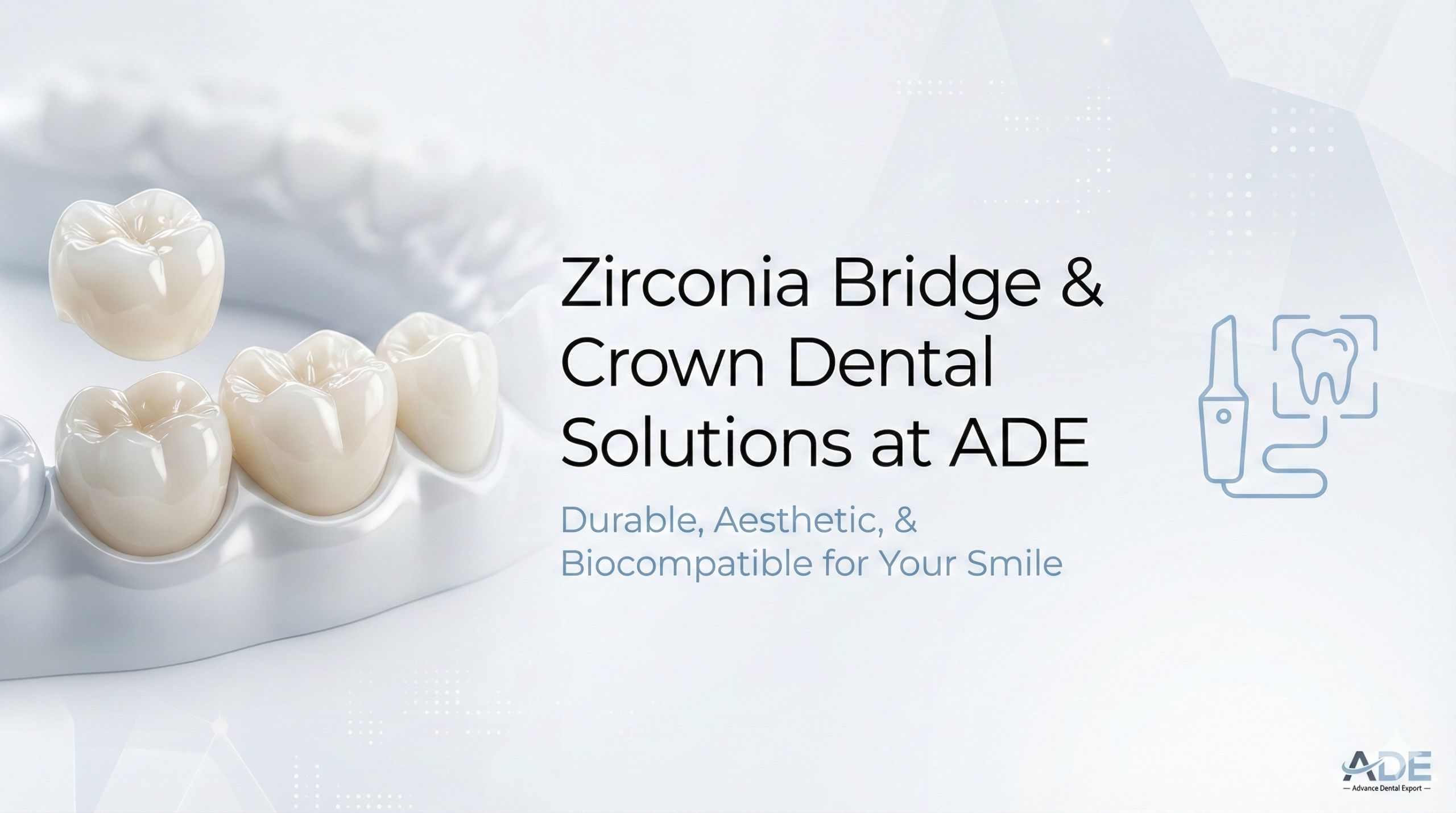
In modern restorative dentistry, few materials have transformed crown and bridge work as significantly as zirconia. Over the past decade, zirconia crowns have moved from being primarily a posterior solution to becoming a highly versatile, aesthetic, and long-lasting option for both anterior and posterior restorations. This evolution is driven by material science advancements, digital workflows, and precise laboratory craftsmanship.
From a dental laboratory perspective, zirconia has proven to be one of the most reliable materials for delivering consistent clinical outcomes while meeting the growing aesthetic expectations of patients worldwide. Dental Solutions Offered at ADE.
What Are Zirconia Crowns?
Zirconia crowns are fabricated from zirconium dioxide, a high-strength ceramic material originally developed for aerospace and orthopedic applications. In dentistry, zirconia is valued for its exceptional fracture resistance, biocompatibility, and ability to be precisely milled using CAD/CAM technology.
Unlike traditional porcelain-fused-to-metal (PFM) crowns, zirconia crowns are completely metal-free, eliminating concerns related to metal allergies, corrosion, and dark marginal lines.
Strength: Built for Long-Term Performance
One of zirconia’s most defining features is its outstanding strength.
-
High fracture resistance: Zirconia exhibits flexural strength that can exceed 900–1200 MPa, making it ideal for high-load areas such as molars and implant-supported restorations.
-
Resistance to chipping: Monolithic zirconia crowns significantly reduce the risk of porcelain chipping, a common issue seen in layered restorations.
-
Ideal for bruxism cases: Due to its durability, zirconia is often the material of choice for patients with heavy occlusal forces or parafunctional habits.
Modern generations of zirconia allow laboratories to balance strength and translucency without compromising structural integrity, ensuring long-term clinical success.
Aesthetics: Natural-Looking Results
Early zirconia restorations were known for strength but criticized for opacity. Today, that limitation has been largely overcome.
-
High-translucency zirconia: Advanced formulations provide improved light transmission, closely mimicking natural enamel.
-
Multi-layered zirconia blanks: These feature built-in color gradients that replicate the dentin-to-enamel transition.
-
Custom shading and staining: Skilled laboratory techniques allow precise matching to adjacent natural teeth.
For anterior restorations, zirconia can be either fully contoured or layered with porcelain for enhanced depth and characterization, delivering excellent aesthetic outcomes even in high-smile-line cases.
Longevity: A Reliable Investment for Patients
When fabricated and placed correctly, zirconia crowns offer exceptional longevity.
-
Excellent wear resistance: Zirconia maintains its surface integrity over time, especially when properly polished or glazed.
-
Biocompatibility: The material is well tolerated by soft tissues, promoting healthy gingival response.
-
Low plaque accumulation: Smooth zirconia surfaces reduce bacterial adhesion, contributing to better oral hygiene maintenance.
Clinical studies and long-term laboratory data consistently show high survival rates for zirconia restorations, often exceeding 10–15 years with proper care.
Digital Precision and Laboratory Excellence
The success of a zirconia crown does not rely on material alone—it depends heavily on laboratory precision.
Advanced digital workflows, including intraoral scanning, CAD design, and high-accuracy milling, allow dental laboratories to produce restorations with excellent marginal fit and occlusal accuracy. Strict quality control, controlled sintering protocols, and expert finishing are critical to ensuring predictable results.
At Advance Dental Export, zirconia restorations are crafted with a strong emphasis on precision, aesthetics, and functional harmony. Every case is handled using state-of-the-art CAD/CAM systems and refined by experienced dental technicians who understand both clinical demands and patient expectations.
When Are Zirconia Crowns the Best Choice?
Zirconia crowns are particularly suitable for:
-
Posterior crowns and bridges
-
Implant-supported restorations
-
Patients with bruxism or high bite force
-
Metal-free restorative requirements
-
Full-arch and full-mouth rehabilitations
With proper case selection and collaboration between dentist and laboratory, zirconia crowns offer a highly predictable restorative solution.
Conclusion
Zirconia crowns represent the perfect balance of strength, aesthetics, and longevity in modern dentistry. Their evolution has made them suitable for nearly every clinical scenario, from single-unit restorations to complex full-arch cases.
As patient expectations continue to rise, zirconia—combined with advanced laboratory expertise—stands as a cornerstone material for durable, natural-looking dental restorations. With meticulous craftsmanship and a commitment to quality, laboratories like Advance Dental Export continue to set high standards in delivering zirconia restorations that clinicians can trust and patients can rely on for years to come.



Leave a Reply